
If you're headed to Historicon this year there will be plenty of 'official' and 'un-official' Fireball games being run. I am running all three scenarios covering the 2nd SS Engineer's counterattack on July 9 and Jerry Frazee is running a couple of the Panther Battalion's counterattack. All of very fun and exciting games.
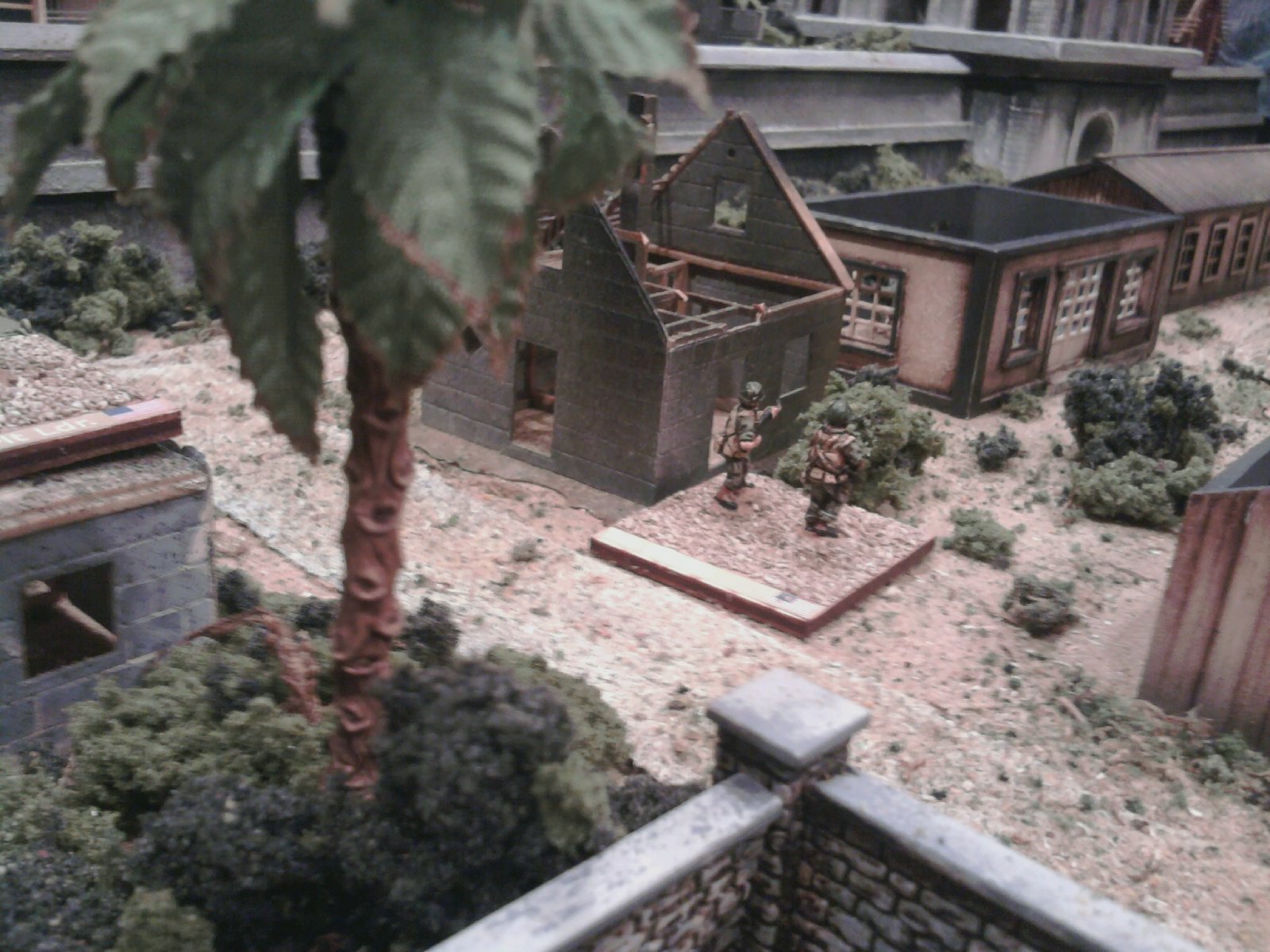
I will also be running a scenario of the American final assault on the ridge at Haut Vent using Tom Ballou's custom built terrain board...should be a nice piece of eye-candy. This game is not listed in the program and I am not sure when we will run it but if you're interested drop me a note at: mfastoso@aim.com
Besides these games I am sure will will run other pick up games. Maybe Jonathan will even bring his gorgeous Hue City terrain. Stop in, play and let me know what you think of the rules.
See you there!
Mark
Tuesday, June 22, 2010


Thursday, June 3, 2010
Artillery Rules...and the Hurtgen Forest
Well...as difficult as it has been to nail down the armor combat rules, which it looks like we finally did, the artillery rules have come together very quickly. We tried them out in two playtests of the second scenario in the Hurtgen Forest: Kall Trail scenario book.
Basically, there are a few types of artillery missions: interdiction, on-call fire, registration and prep fire. Except for interdiction they are all more or less played the same way with slight variations. Interdiction represents artillery fire being used behind the enemy's front lines to impede his progress, resupply, hinder reinforcements, etc. This is represented by a player using his interdiction artillery mission to prevent the opposing player from using 'initiative chips.' It works well...basically to slow down the enemy's advance. The other missions have an FO or company commander pick a target point and make a morale check...if they pass then they roll on the artillery chart. The artillery chart is the key. You roll 2d6 and the chart tells you what happens.
The idea behind this is we do not want (or feel we need) to model the entire procedure for calling in off board artillery. Basically you order that fire be placed on a target and there is a dramatic event...or not. The chart gives a storyline as well as a result so you know what happened. For example if you roll a 5 the result is:
5 Hello??? Hello??? - Armor moving through the area has run over telephone lines interrupting communications. The FO struggles to get is his request through.
No effect – the fire mission is NOT expended and may be used on a following turn.
Our feeling is that the game is about tactics and simple rules...not complex procedures for very technical operations. Artillery is dramatic and possibly decisive on the battlefield. American Artillery which is the best in WW2...imho...has a success on a 7+ with a 6 being possibly good. 4-5 are nothing and 2-3 are bad results.
After a few playtests everyone loves it.
We played a scenario from the Hurtgen book with lots of US artillery. The game was the German assault on Kommerscheidt, which is also an old GI Anvil of Victory scenario. The German armor commander wrote that he attacked the town but kept waiting for the infantry to follow him...they never did. He finally reached his objective and still the infantry never showed up so he retreated. As the American account of the fight mentions the liberal use of artillery it was decided that we would give the Germans infantry but also give the US plenty of artillery. The result was what we had expected. The US artillery compounded with alot of open ground allowed the US player to chew-up the German infantry. Although they made progress it was slow and costly.
So..it seems like the big three elements of the rules are finally shaking out! Infantry, Armor and Artillery all seem to be very close to working!
Mark
Basically, there are a few types of artillery missions: interdiction, on-call fire, registration and prep fire. Except for interdiction they are all more or less played the same way with slight variations. Interdiction represents artillery fire being used behind the enemy's front lines to impede his progress, resupply, hinder reinforcements, etc. This is represented by a player using his interdiction artillery mission to prevent the opposing player from using 'initiative chips.' It works well...basically to slow down the enemy's advance. The other missions have an FO or company commander pick a target point and make a morale check...if they pass then they roll on the artillery chart. The artillery chart is the key. You roll 2d6 and the chart tells you what happens.
The idea behind this is we do not want (or feel we need) to model the entire procedure for calling in off board artillery. Basically you order that fire be placed on a target and there is a dramatic event...or not. The chart gives a storyline as well as a result so you know what happened. For example if you roll a 5 the result is:
5 Hello??? Hello??? - Armor moving through the area has run over telephone lines interrupting communications. The FO struggles to get is his request through.
No effect – the fire mission is NOT expended and may be used on a following turn.
Our feeling is that the game is about tactics and simple rules...not complex procedures for very technical operations. Artillery is dramatic and possibly decisive on the battlefield. American Artillery which is the best in WW2...imho...has a success on a 7+ with a 6 being possibly good. 4-5 are nothing and 2-3 are bad results.
After a few playtests everyone loves it.
We played a scenario from the Hurtgen book with lots of US artillery. The game was the German assault on Kommerscheidt, which is also an old GI Anvil of Victory scenario. The German armor commander wrote that he attacked the town but kept waiting for the infantry to follow him...they never did. He finally reached his objective and still the infantry never showed up so he retreated. As the American account of the fight mentions the liberal use of artillery it was decided that we would give the Germans infantry but also give the US plenty of artillery. The result was what we had expected. The US artillery compounded with alot of open ground allowed the US player to chew-up the German infantry. Although they made progress it was slow and costly.
So..it seems like the big three elements of the rules are finally shaking out! Infantry, Armor and Artillery all seem to be very close to working!
Mark
Friday, May 28, 2010
Hue City, 1968
A few weeks ago Jonathan ran a Hue City game using FIreball Forward. Actually, the game was first developed for his Hue City scenarios.The game was a blast and his terrain was a usual outstanding. One of his original ideas was if the game looks great it only enhances the experience of the players...and he is right.
The only rules change we tried was ranged infantry fire. Basically Squads/teams have an effective range of 12-inches and a long range of 24-inches. MGs have 24 and 48 respectively. Fire at short range is a normal and at long range the 'white' die suffers a -1 penalty. It seemed to work fine and everyone playing liked it. Since this game we have used it in several others and it seems to work fine.
The hue City scenario models an action later in the fight where the marines are trying to move up to Phase Line Green and secure the Dong Ba Gate. Simultaneously the NVA are trying to hold the gate and push into the American deployment area. As the game went eh NVA were able to siege a US held building complex in effect bottling up their advance on the right flank but the US left supported by an M48 managed to fight its way to the Gate. But a stalwart group of NVA diehards managed to hold on and the US never got full possession of the Gate. It was a narrow NVA victory. Here are some great pics.


One other nice element the rules provided was the ability to model command and resilience (or lack of) for different troops. Jonathan felt the NVA leadership was distracted during this fight and they did not do good job of controlling their men. To simulate this we gave the NVA infantry a morale of 4+ but the leaders were 5+. Meaning the troops would break morale on a 3 or less but only rally on a 5 or 6. It worked great. The NVA got in one really good coordinated attack but when it broke down it was difficult for them to reform quickly and assault again.
More on the latest armor rules soon.
Mark
The only rules change we tried was ranged infantry fire. Basically Squads/teams have an effective range of 12-inches and a long range of 24-inches. MGs have 24 and 48 respectively. Fire at short range is a normal and at long range the 'white' die suffers a -1 penalty. It seemed to work fine and everyone playing liked it. Since this game we have used it in several others and it seems to work fine.
The hue City scenario models an action later in the fight where the marines are trying to move up to Phase Line Green and secure the Dong Ba Gate. Simultaneously the NVA are trying to hold the gate and push into the American deployment area. As the game went eh NVA were able to siege a US held building complex in effect bottling up their advance on the right flank but the US left supported by an M48 managed to fight its way to the Gate. But a stalwart group of NVA diehards managed to hold on and the US never got full possession of the Gate. It was a narrow NVA victory. Here are some great pics.



One other nice element the rules provided was the ability to model command and resilience (or lack of) for different troops. Jonathan felt the NVA leadership was distracted during this fight and they did not do good job of controlling their men. To simulate this we gave the NVA infantry a morale of 4+ but the leaders were 5+. Meaning the troops would break morale on a 3 or less but only rally on a 5 or 6. It worked great. The NVA got in one really good coordinated attack but when it broke down it was difficult for them to reform quickly and assault again.
More on the latest armor rules soon.
Mark
Thursday, May 6, 2010
The verdict on the new ranged fire rules
Well, last tuesday night we played a Hurtgen Forest scenario that was full of infantry and tanks. The new armor and infantry fire rules were used and we had a very interesting playtest experience. We had players that were very familiar with the new rules and players that were brand new to them. There was some unease as the game went on for two main reasons. 1. Players had no concept of the chances of a kill with the new rules. 2. The new rules meant we would have to totally rewrite the spotting rules.
The first point means that players had no idea how to implement proper tactics. The US armor commander (Tom Garnett) had no clue as to what range he should engage the German armor. He was right to feel that way. The older system used a handful of d6s needing 6s to cause damage. A player rolling 8d6 basically would know he would probably get at least one damage result. This simpler handful of d6 mechanic means that players know the effectiveness of their weapons without having to take a course in calculus. That is more in keeping with the philosophy of the rules.
The second point about changing the spotting really drove home that the new firing rules were basically changing the entire concept of the game. It was becoming one more reliant on exacting measurements and parceling out particular situations. This is a major point as we basically would be creating an entirely new game.
We all came to the conclusion that the original system was how we want the game to play. Simple rules that allow players to focus on tactics. So....when Jonathan returns from out of town we will sit down and figure out how to work his excellent data into our original handful of dice armor system...and the infantry fire will stay as it has been played since the beginning.
Thanks so much to all the playtesters. Not only did this help me understand how the game is developing...it helped me understand how gamers approach their hobby.
These new rules looked promising but in the end they were taking the game in an entirely new direction. Ultimately I hope to create a miniatures game that has the feel of the old Avalon HIll games 'Napoleon', 'Victory in the Pacific' or 'War at Sea.'
Mark
The first point means that players had no idea how to implement proper tactics. The US armor commander (Tom Garnett) had no clue as to what range he should engage the German armor. He was right to feel that way. The older system used a handful of d6s needing 6s to cause damage. A player rolling 8d6 basically would know he would probably get at least one damage result. This simpler handful of d6 mechanic means that players know the effectiveness of their weapons without having to take a course in calculus. That is more in keeping with the philosophy of the rules.
The second point about changing the spotting really drove home that the new firing rules were basically changing the entire concept of the game. It was becoming one more reliant on exacting measurements and parceling out particular situations. This is a major point as we basically would be creating an entirely new game.
We all came to the conclusion that the original system was how we want the game to play. Simple rules that allow players to focus on tactics. So....when Jonathan returns from out of town we will sit down and figure out how to work his excellent data into our original handful of dice armor system...and the infantry fire will stay as it has been played since the beginning.
Thanks so much to all the playtesters. Not only did this help me understand how the game is developing...it helped me understand how gamers approach their hobby.
These new rules looked promising but in the end they were taking the game in an entirely new direction. Ultimately I hope to create a miniatures game that has the feel of the old Avalon HIll games 'Napoleon', 'Victory in the Pacific' or 'War at Sea.'
Mark
Monday, May 3, 2010
Ranged Infantry FIre Rules
On Saturday evening Sean, Adrian, Tom Ballou and myself played the second scenario in the Mark IV battalion mini-campaign and we tried a new take on infantry fire. Basically Jonathan reworked the firing system used for armor combat. Players resolve fire combat by rolling a certain number of 'damage' dice and a 'range' die. The range die can be modified by certain factors (a short list) and if the target is in whatever final range is determined, then the damage dice may have an effect. Everyone thought it played well although perhaps a bit more deadly...more playtesting will be needed to see if that is the case.
The jury is still out on all this. The advantage of the new take on infantry fire combat is that it matches the way we resolve armor combat so the system is the same across the rules. The disadvantage is it is a slightly more complex system. The complexity issue has not been a problem after players go through a couple of turns. But the original system was simple and elegant. A good test is always running the games at the big conventions. There I can see how players who have never played it before react to the feel of the game. So we will see what players at Historicon think about it.
If we do ultimately decide to not use this new system we will have to revamp the armor rules because I do feel that having one system across the rules is the way to go.
Mark
The jury is still out on all this. The advantage of the new take on infantry fire combat is that it matches the way we resolve armor combat so the system is the same across the rules. The disadvantage is it is a slightly more complex system. The complexity issue has not been a problem after players go through a couple of turns. But the original system was simple and elegant. A good test is always running the games at the big conventions. There I can see how players who have never played it before react to the feel of the game. So we will see what players at Historicon think about it.
If we do ultimately decide to not use this new system we will have to revamp the armor rules because I do feel that having one system across the rules is the way to go.
Mark
Friday, April 23, 2010
Latest game and new thoughts on Machine Guns
On Wednesday I had the opportunity to run Fireball for a great group of guys that unfortunately I can only game with on rare occasions. Rick Wynn and his crew are a very creative bunch that play a wide spectrum of periods and are always open to new and interesting rules. We played the scenario 'Holding On' from the Panther mini-campaign of the St Lo book. It features two platoons of GIs with some M10s trying to hold off a full company of Panzer Grenadiers supported by a Panther. I am not going to give a blow-by-blow account and suffice to say that everyone had fun and the Germans were not able to breakdown the American defense. One of the primary reasons for this was a flank attack by the M10s. Steve Wynn (Rick's brother) maneuvered them through hedgerows on the flank of the German assault and although he lost one tank destroyer he essentially caused the general German attack to bog-down.
There was one big issue that he raised during his battle with the German infantry. His remaining M10 was alone in the middle of a field that was bordered by hedgerows. Since the Germans had an entire platoon of infantry facing him they decided to charge the entire platoon into the field to bombard the tank destroyer with panzerfausts. Since the M10 can only take one opportunity fire that means that two squads could move in a frontal assault against the M10 with impunity. This does not seem right. The vehicle has machine guns and a frontal assault is not the correct tactic and in fact seems like a 'gamey' move. Since the rules philosophy is to encourage correct tactics we need to address this.
Steve has a good suggestion that I am going to try. Tanks, AFVs and machine gun teams can fire multiple opportunity shots if the infantry target ends its move in the open. Simple, elegant and I think right on. This encourages infantry to move from cover to cover while making machine guns significantly different from regular small arms. Machine gun teams will have the option of either doing the 'grazing fire' rule -OR- take multiple opportunity shots at targets that finish their move in the open.
Thanks to all the guys at 'Wednesday Night at the Fights.'
Mark
There was one big issue that he raised during his battle with the German infantry. His remaining M10 was alone in the middle of a field that was bordered by hedgerows. Since the Germans had an entire platoon of infantry facing him they decided to charge the entire platoon into the field to bombard the tank destroyer with panzerfausts. Since the M10 can only take one opportunity fire that means that two squads could move in a frontal assault against the M10 with impunity. This does not seem right. The vehicle has machine guns and a frontal assault is not the correct tactic and in fact seems like a 'gamey' move. Since the rules philosophy is to encourage correct tactics we need to address this.
Steve has a good suggestion that I am going to try. Tanks, AFVs and machine gun teams can fire multiple opportunity shots if the infantry target ends its move in the open. Simple, elegant and I think right on. This encourages infantry to move from cover to cover while making machine guns significantly different from regular small arms. Machine gun teams will have the option of either doing the 'grazing fire' rule -OR- take multiple opportunity shots at targets that finish their move in the open.
Thanks to all the guys at 'Wednesday Night at the Fights.'
Mark
Wednesday, April 14, 2010
'Hold on, boys!' After Action Report
Last night we played a second playtest of 'Hold on, Boys' the first scenario in a 3 or 4 scenario mini-campaign covering the counterattack of Panzer Lehr's 901st Panzergrenadier Regiment north of Haut Vents on July 10th. Overall this is part of my scenario book about Panzer Lehr's counterattack during that period.
This scenario depicts the 901's attempt to breakthrough the American front lines and penetrate into the US rear areas with Mark IVs. The Americans have a company of infantry and a battalion HQ group while the Germans have two platoons of Panzergrenadiers, five Mark IVs, one Mark III Flammpanzer and a Puma Armored car with a 20mm Autocannon. The Americans were played by Sean Barnett and the Germans by Curt Daniels. The Germans have one permanent initiative chip while the US has two one-time use chips that can only be used on the Battalion HQ. The game is played a night with 12-inch maximum visibility.
The game started with a short German artillery barrage that hit one of the forward deployed US platoons. The dogfaces hunkered down and managed to avoid taking many casualties but the fire did keep their heads down. The Germans then came at them out of the darkness and hit the GIs, quickly overwhelming 2nd Squad. The platoon commander decided that the best defense was good offense and ordered 1st squad to manuever in an adjacent hedgerow and hit the Germans in the flank. Sgt. Riley had is men crawl along the base of the hedgerow and popping his head over saw the an entire German platoon. They opened fire and several Germans fell back screaming and hollering. Just as Riley was about to give his squad the order to fall back another German platoon appeared on his flank and ripped into him. He fell dead instantly and his men ran for their lives. They were caught in a deathtrap and several men were killed with the rest wounded. The war was over for 1st squad.
Hearing the firing Major Barnett ordered every available man towards the front as he personally led his battalion HQ group forward. The Major was concerned that the Germans would push through the lead platoon and infiltrate an orchard that screened the front of the battalion HQ. Meanwhile Hauptmann Daniels was determined to push through the orchard helping to clear that way for the Panzer to roll on. Setting up an MG42 he laid down a base of fire on a group of farm houses on the edge of the orchard. A fierce firefight erupted and the Germans made a rush for the houses only to be turned back by 30.cal Browning MachineGun fire. The German Luetnant leading the platoon rallied his men, directed more covering fire and had them try again. This time they knocked out the US machine gun and cleared the buildings.
Just as the farm was falling German tanks and armoured cars began to appear and engage the GIs. 75mm shells began to hammer 1st Platoon holding the orchard and 20mm fire from a Puma raked their left flank. Across the road on the US extreme left 3rd platoon held their part of the line nervously listening to the increasing volume of fire to their right. Then out of the darkness they spotted movement in the field to their front. The Lt. ordered his MGs to open up and the mysterious figures disappeared. A few minutes later the opposite hedgerow erupted in rifle and machine gun fire and more Germans made a rush. Lt. Smith hollered above the din of battle to 'Let 'em have it!' and the entire platoon opened up. Germans fell in droves and the attack was stopped cold. The German platoon was in disarray with the platoon Lt. dead and the field littered with dead and wounded grenadiers.
Meanwhile, Major Barnett and his men were taking an awful beating in the orchard. 2nd Platoon was holding but just barely and 1st had fallen back. Hauptmann Daniels sensed that the orchard was ready to fall and fearing that he was losing valuable time until daylight, ordered his tanks to roll through the orchard and up the main road. As a Mark IV lumbered between two hedgerows a bazooka rocket screamed out and punched a hole in the side skirt armor but failed to stop the tank. Desperately trying to reload the bazooka T/5 Balkowski was horrified as another German tank rolled over the hedgerow to his right and headed straight at him firing its machine-guns. His loader was already running away when he realized he was in a bad spot. The orchard was now in German hands and the tanks on the road began to move out. No sooner had they moved another 15 yards then bazooka rockets flew at them from both sides of the road. The lead Mark IV blew up in a fireball that lit up the night.

In an attempt to drive the US back 3rd platoons bazooka team a Flammpanzer broke into the field and hosed down the GIs with burning gasoline jelly. They quickly hightailed it back to their foxholes.
3rd Platoon which had stopped the Germans to their front now moved to try and flank the German column. Although German infantry kept them at bay the bazooka teams took out the Puma further blocking the road. With the orchard cleared Hauptman Daniels tried top make one last armored push through the orchard and breakout. Mark IVs crashed through the farside of the hedgerow and made a run for the rear areas. But T/5 Balkowski was ready for them. He had grabbed his loader and steadied the boy. Taking up a position between two farmhouses he waited patiently for a Mark IV to roll by.
Balkowski heard and saw the giant tank roll into view and after saying a quick Hail Mary he squeezed the trigger of his bazooka. The explosion nearly knocked him off of his feet as the German panzer exploded and came to a halt. With the road blocked the German attack subsided. Clearly they would need to find another way through the lines. Company K was just too tough.
This second playtest was a clear US victory. The first playtest was a clear German victory.
Mark
This scenario depicts the 901's attempt to breakthrough the American front lines and penetrate into the US rear areas with Mark IVs. The Americans have a company of infantry and a battalion HQ group while the Germans have two platoons of Panzergrenadiers, five Mark IVs, one Mark III Flammpanzer and a Puma Armored car with a 20mm Autocannon. The Americans were played by Sean Barnett and the Germans by Curt Daniels. The Germans have one permanent initiative chip while the US has two one-time use chips that can only be used on the Battalion HQ. The game is played a night with 12-inch maximum visibility.
The game started with a short German artillery barrage that hit one of the forward deployed US platoons. The dogfaces hunkered down and managed to avoid taking many casualties but the fire did keep their heads down. The Germans then came at them out of the darkness and hit the GIs, quickly overwhelming 2nd Squad. The platoon commander decided that the best defense was good offense and ordered 1st squad to manuever in an adjacent hedgerow and hit the Germans in the flank. Sgt. Riley had is men crawl along the base of the hedgerow and popping his head over saw the an entire German platoon. They opened fire and several Germans fell back screaming and hollering. Just as Riley was about to give his squad the order to fall back another German platoon appeared on his flank and ripped into him. He fell dead instantly and his men ran for their lives. They were caught in a deathtrap and several men were killed with the rest wounded. The war was over for 1st squad.
Hearing the firing Major Barnett ordered every available man towards the front as he personally led his battalion HQ group forward. The Major was concerned that the Germans would push through the lead platoon and infiltrate an orchard that screened the front of the battalion HQ. Meanwhile Hauptmann Daniels was determined to push through the orchard helping to clear that way for the Panzer to roll on. Setting up an MG42 he laid down a base of fire on a group of farm houses on the edge of the orchard. A fierce firefight erupted and the Germans made a rush for the houses only to be turned back by 30.cal Browning MachineGun fire. The German Luetnant leading the platoon rallied his men, directed more covering fire and had them try again. This time they knocked out the US machine gun and cleared the buildings.

Just as the farm was falling German tanks and armoured cars began to appear and engage the GIs. 75mm shells began to hammer 1st Platoon holding the orchard and 20mm fire from a Puma raked their left flank. Across the road on the US extreme left 3rd platoon held their part of the line nervously listening to the increasing volume of fire to their right. Then out of the darkness they spotted movement in the field to their front. The Lt. ordered his MGs to open up and the mysterious figures disappeared. A few minutes later the opposite hedgerow erupted in rifle and machine gun fire and more Germans made a rush. Lt. Smith hollered above the din of battle to 'Let 'em have it!' and the entire platoon opened up. Germans fell in droves and the attack was stopped cold. The German platoon was in disarray with the platoon Lt. dead and the field littered with dead and wounded grenadiers.
Meanwhile, Major Barnett and his men were taking an awful beating in the orchard. 2nd Platoon was holding but just barely and 1st had fallen back. Hauptmann Daniels sensed that the orchard was ready to fall and fearing that he was losing valuable time until daylight, ordered his tanks to roll through the orchard and up the main road. As a Mark IV lumbered between two hedgerows a bazooka rocket screamed out and punched a hole in the side skirt armor but failed to stop the tank. Desperately trying to reload the bazooka T/5 Balkowski was horrified as another German tank rolled over the hedgerow to his right and headed straight at him firing its machine-guns. His loader was already running away when he realized he was in a bad spot. The orchard was now in German hands and the tanks on the road began to move out. No sooner had they moved another 15 yards then bazooka rockets flew at them from both sides of the road. The lead Mark IV blew up in a fireball that lit up the night.

In an attempt to drive the US back 3rd platoons bazooka team a Flammpanzer broke into the field and hosed down the GIs with burning gasoline jelly. They quickly hightailed it back to their foxholes.

3rd Platoon which had stopped the Germans to their front now moved to try and flank the German column. Although German infantry kept them at bay the bazooka teams took out the Puma further blocking the road. With the orchard cleared Hauptman Daniels tried top make one last armored push through the orchard and breakout. Mark IVs crashed through the farside of the hedgerow and made a run for the rear areas. But T/5 Balkowski was ready for them. He had grabbed his loader and steadied the boy. Taking up a position between two farmhouses he waited patiently for a Mark IV to roll by.

Balkowski heard and saw the giant tank roll into view and after saying a quick Hail Mary he squeezed the trigger of his bazooka. The explosion nearly knocked him off of his feet as the German panzer exploded and came to a halt. With the road blocked the German attack subsided. Clearly they would need to find another way through the lines. Company K was just too tough.
This second playtest was a clear US victory. The first playtest was a clear German victory.
Mark
Subscribe to:
Posts (Atom)